Vaccination and Disease Prevention for Your Cavalier King Charles Spaniel in Oregon: What Science Says About Core Shots, Lepto Risk, and Immunity
- Green Acres K-9 Resort
- 1 hour ago
- 6 min read

A thoughtful vaccination plan is one of the simplest ways to protect your Cavalier King Charles Spaniel from serious, preventable disease. It also gives your veterinarian a regular opportunity to monitor breed-specific health concerns, including mitral valve disease, dental health, weight, mobility, and changes that may affect your companion’s quality of life.
For families bringing home Cavalier King Charles Spaniel puppies in Oregon, the goal is not to give every available vaccine automatically. The goal is to use science, Oregon law, local disease patterns, and your dog’s lifestyle to create a preventive care plan that fits.
Important: Vaccination decisions should be made with your licensed veterinarian. Vaccine products, legal requirements, medical history, and boarding-facility policies can vary.
1. Know the difference between core and noncore vaccines
The 2022 AAHA Canine Vaccination Guidelines divide vaccines into two practical groups:
Core vaccines: Recommended for essentially all dogs because the diseases are severe, widespread, zoonotic, or legally important.
Noncore vaccines: Recommended according to geography, lifestyle, travel, exposure, and local disease activity.
For a typical Cavalier, core protection generally includes:
Canine distemper virus
Canine adenovirus, usually provided as CAV-2
Canine parvovirus
Rabies, according to Oregon law
Leptospirosis when the disease is present locally and an appropriate vaccine is available
The original 2022 AAHA materials treated leptospirosis as a lifestyle-based vaccine. AAHA later updated its recommendation, moving the four-serovar leptospirosis vaccine into the core category for most dogs. The 2024 WSAVA vaccination guidelines similarly describe leptospirosis vaccination as core in regions where canine leptospirosis occurs, the relevant serogroups are known, and suitable vaccines are available.
That distinction matters in Oregon. A healthy Cavalier living in a suburban Portland home may still have meaningful exposure risk, even without farm or hunting activities.
2. Build the puppy series around immunity: not just age
Puppies receive antibodies from colostrum during their first hours of life. These maternally derived antibodies help protect a young puppy, but they can also interfere with vaccination. This creates a temporary “window of susceptibility”: maternal protection may be declining while still blocking a vaccine response.
The 2024 WSAVA guidance recommends:
Begin core viral vaccination at approximately 6–8 weeks of age.
Repeat doses every 2–4 weeks.
Give the final puppy dose at 16 weeks of age or older.
Consider either a core antibody test from about 20 weeks of age onward or an additional core vaccination at or shortly after 26 weeks.
The final dose is especially important because most puppies can respond effectively by that stage. A responsible owner should also ask for complete records, including vaccine names, dates, lot numbers, and the veterinarian’s recommendations for the next dose.
Leptospirosis vaccines are different from the modified-live viral core vaccines. They generally require two initial doses, usually separated by 2–4 weeks, followed by annual boosters. Your veterinarian will select the starting age based on the product label and your puppy’s health and exposure risk.
Careful scheduling helps your puppy develop reliable immunity while still allowing safe, controlled socialization. That supports the therapy-like temperaments valued by families seeking a calm companion or future therapy dog.
3. Why leptospirosis deserves special attention in the PNW
Leptospirosis is a bacterial disease that can damage the kidneys, liver, lungs, and other organs. It is also zoonotic, meaning infected animals can potentially expose people.
Oregon’s climate makes this an important conversation. In a study of Oregon dogs diagnosed between 2007 and 2011, researchers identified 72 confirmed cases. Most were diagnosed in spring and occurred in western Oregon, where rainfall is substantially higher. Common recorded exposures included environmental water and wildlife, but 33 of 65 dogs with completed exposure information had no known exposure risk.
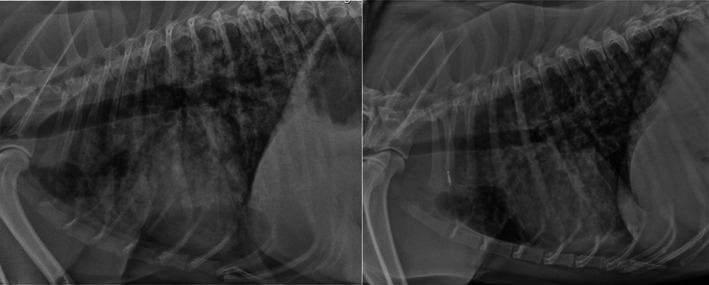
The lesson is not that every puddle is dangerous. It is that exposure is difficult to predict accurately. Rodents and wildlife can contaminate soil and water, and Leptospira organisms may remain viable in moist environments. A dog does not need to swim in a remote mountain stream to encounter the organism.
The 2023 ACVIM consensus statement recommends annual leptospirosis vaccination for dogs regardless of breed, size, lifestyle, geography, or season. In North America, available canine vaccines are generally quadrivalent, covering four serovars: Icterohaemorrhagiae, Canicola, Grippotyphosa, and Pomona.
Vaccination does not guarantee complete protection, but the evidence supports reduced disease risk and reduced kidney carriage. Preventive steps should also include:
Limiting access to standing water and marshy areas
Controlling rodents around the home, kennel, and food-storage areas
Preventing wildlife predation
Calling your veterinarian promptly for sudden lethargy, vomiting, fever, increased thirst, or changes in urination
Early detection is important because leptospirosis can progress quickly to acute kidney injury. Prompt veterinary assessment helps protect your Cavalier and your household.
4. Boarding, daycare, and respiratory vaccines
Bordetella bronchiseptica and canine parainfluenza are commonly associated with canine infectious respiratory disease, sometimes called kennel cough. These vaccines are usually noncore for dogs living in low-contact homes, but they become more relevant for dogs who:
Attend daycare
Board
Visit dog parks or group training
Participate in shows or events
Regularly interact with unfamiliar dogs
Travel to areas with active respiratory disease
Canine influenza vaccination may also be considered when local disease activity, travel, or group housing creates additional risk. Respiratory vaccines may not prevent every infection, but they can reduce disease severity and shedding.
Because Green Acres Nextgen Cavaliers also operates boarding and daycare services, families should keep vaccination records current and check facility requirements before a stay. Dogs entering group settings should be healthy and protected according to the facility’s policy and veterinary advice. You can contact Green Acres Nextgen Cavaliers to discuss services and current requirements.
5. Rabies vaccination is required in Oregon
Oregon law requires dogs to be immunized against rabies by six months of age, with specific exemptions. Under Oregon Administrative Rule 333-019-0017, vaccination must be performed by a licensed veterinarian, or by an appropriately certified veterinary technician under direct veterinary supervision.
Keep the signed rabies certificate in your records. It should include the vaccination date, revaccination due date, vaccine information, and a description of your dog.
Rabies titers generally do not replace legally required vaccination. Legal requirements take priority over general vaccination guidelines.
6. Titers can personalize some revaccination decisions
Antibody titer testing, or serology, measures antibodies against selected diseases. The 2024 WSAVA guidelines support its use for canine distemper virus, canine adenovirus, and canine parvovirus.
A titer may be useful when:
A puppy’s response after the primary series needs confirmation
An adult dog has an uncertain vaccination history
A dog previously experienced a concerning vaccine reaction
An owner wants to avoid automatic revaccination when immunity is likely to persist
A Cavalier is receiving immunosuppressive treatment
A positive antibody result for these core viral diseases generally correlates with protection in an actively immunized dog. Testing is less useful for deciding whether to skip leptospirosis boosters because antibody levels do not reliably predict protection against that disease.
Titer testing also has limitations. In-practice tests vary in accuracy, particularly for distemper and adenovirus, so your veterinarian may recommend a reference laboratory. A negative result may lead to revaccination and retesting.
7. Vaccine safety: use risk-based planning
A 2023 JAVMA study of more than 4.6 million dogs found 19.4 adverse events per 10,000 vaccination visits within three days of vaccination. The overall risk was low, but adverse events were more common in smaller dogs, especially those weighing 5 kg or less, and when multiple separate vaccines were administered during one visit.
This does not mean small dogs should receive partial doses. The 2024 WSAVA guidelines do not recommend reducing a licensed vaccine dose for a small dog. Instead, your veterinarian may consider the dog’s history, body size, health status, and whether all injections are necessary at the same appointment.
After vaccination, mild tiredness, reduced appetite, soreness, or a low fever can occur. Contact your veterinarian promptly for facial swelling, hives, repeated vomiting, breathing difficulty, collapse, or other severe signs.
8. Preventive care supports Cavalier health and longevity
Vaccination is only one part of a complete plan for breed-specific health. Cavaliers have a known predisposition to myxomatous mitral valve disease, so regular examinations should include careful heart auscultation. Your veterinarian may recommend more frequent monitoring if a murmur is detected.
A practical lifetime plan may include:
Puppy examinations and completion of the primary vaccine series
Annual health checks, or more frequent visits for seniors
Heart and dental monitoring
Weight, nutrition, and mobility assessments
Parasite prevention
Leptospirosis risk review
Boarding and daycare vaccine planning
Titer testing when appropriate
Early evaluation of cough, exercise intolerance, vomiting, diarrhea, or urinary changes
For families in Boring, Portland, and throughout Oregon, proactive care can support a longer, healthier Cavalier lifespan and help your companion remain comfortable for family life, emotional support, or therapy-dog work.
A good vaccination plan is not about doing more. It is about doing what is supported by evidence, required by law, and appropriate for the individual dog.
Bibliography
Ellis J, et al. 2022 AAHA Canine Vaccination Guidelines.Journal of the American Animal Hospital Association. 2022;58:213–230.
Squires RA, et al. 2024 Guidelines for the Vaccination of Dogs and Cats. World Small Animal Veterinary Association Vaccination Guidelines Group. Journal of Small Animal Practice. 2024.
Sykes JE, et al. Updated ACVIM consensus statement on leptospirosis in dogs.Journal of Veterinary Internal Medicine. 2023;37:1966–1982.
Grayzel SE, DeBess EE. Canine leptospirosis in Oregon, 2007–2011.Journal of the American Veterinary Medical Association. 2016;248:908–915.
Moore GE, et al. Breed, smaller weight, and multiple injections are associated with increased adverse event reports following canine vaccination.Journal of the American Veterinary Medical Association. 2023;261:1653–1659.
Oregon Administrative Rule 333-019-0017: Rabies Vaccination for Animals.
Centers for Disease Control and Prevention: Leptospirosis in Pets.
Green Acres Nextgen Cavaliers. Information about the Green Acres Nextgen Cavaliers breeding and companion-animal program in Boring, Oregon.
Comments