The Neurobiology of the Human-Cavalier Bond: What Science Says About Why Your Cavalier King Charles Spaniel Is a Natural Therapy Dog
- Green Acres K-9 Resort
- 1 day ago
- 5 min read

Welcome to Day 11 of our 30-day science-based series at Green Acres Nextgen Cavaliers. As a specialized breeding program in Boring, Oregon, we are often asked why the Cavalier King Charles Spaniel seems to possess an almost supernatural ability to comfort those in need. Owners frequently describe a "sixth sense" their furry friend has for emotional shifts. While these experiences feel magical, they are actually rooted in a complex neurobiological framework shaped by centuries of selective breeding and specific hormonal pathways.
Understanding the science behind this bond helps us appreciate why your Cavalier King Charles Spaniel is a natural candidate for therapy work and how their biology interacts with your own to create a state of physiological calm.
The Genetic Blueprint for Affiliation
The journey of the Cavalier from a royal lap dog to a modern therapy dog began with its genetics. A 2021 study published in PLOS Genetics analyzed the consequences of breed formation, noting that Cavaliers have been specifically selected for traits that prioritize human companionship over hunting or guarding instincts (Axelsson et al., 2021). This long-term selection has resulted in a "hyper-social" phenotype.
Unlike many breeds that maintain a degree of independence, the Cavalier’s genetic makeup predisposes them toward affiliative behavior, a scientific term for the desire to seek out and maintain social connections. This genetic foundation means that when you bring home Cavalier King Charles Spaniel puppies in Oregon, you are bringing home a companion whose very DNA is wired to prioritize the human-animal bond. This is the cornerstone of what we call "therapy-quality temperament."
The Oxytocin-Gaze Loop: A Neurochemical Connection
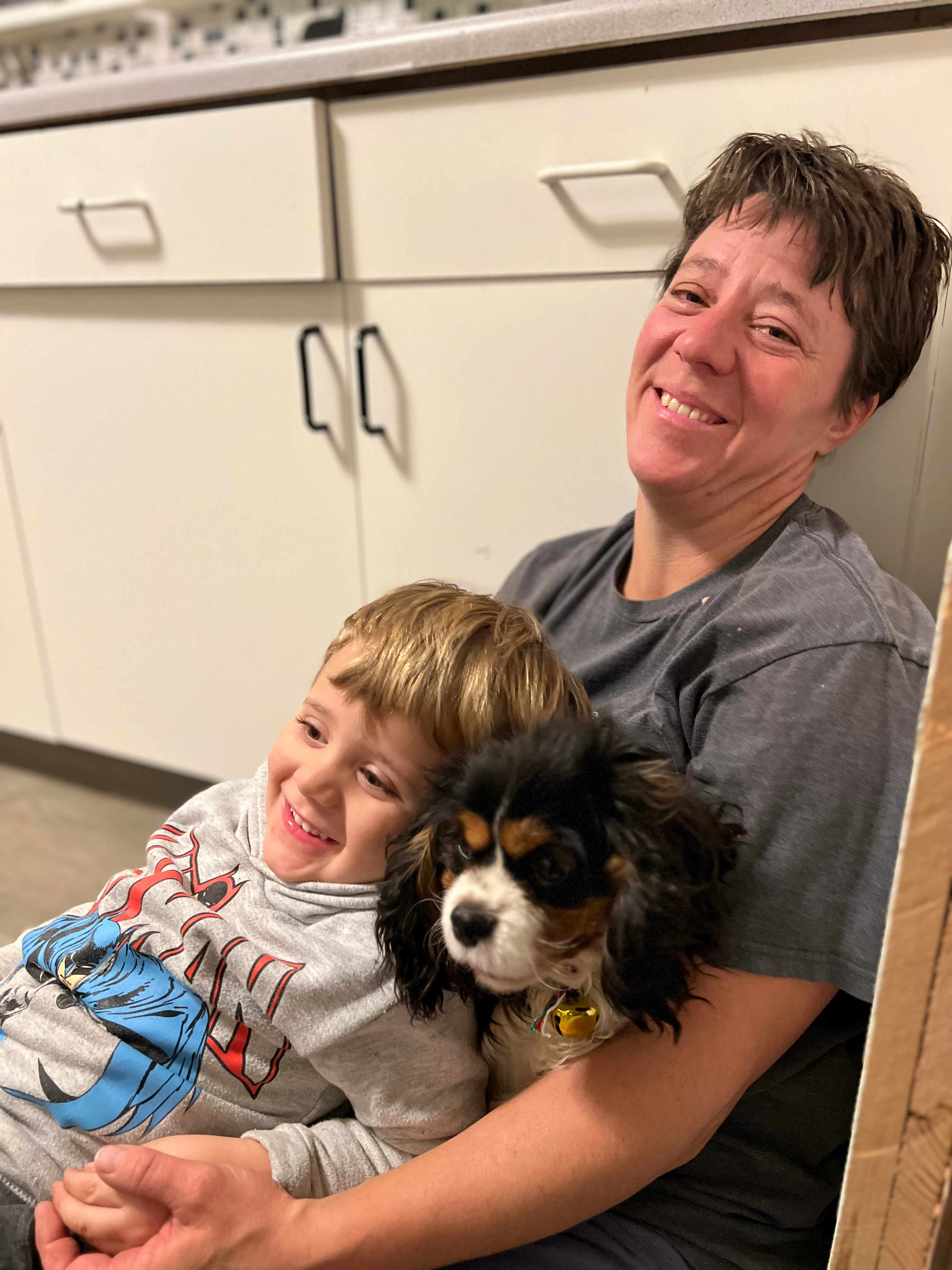
At the heart of the relationship between you and your companion is a neurochemical loop dominated by oxytocin, often referred to as the "attachment hormone." Research published in MDPI Animals highlights that the dog-owner relationship mirrors the biological mechanisms of the mother-infant bond (Payne et al., 2019). When you look into your Cavalier’s large, soulful eyes, both you and your furry friend experience a release of oxytocin in the brain.
This hormonal surge does more than just make you feel "good." It actively suppresses the production of cortisol, the body’s primary stress hormone. A review in Cureus explored these biomarkers in animal-assisted interventions, confirming that the presence of a therapy dog can measurably lower cortisol levels while elevating oxytocin, leading to a state of relaxation and increased trust (Khandaker et al., 2020). For a Cavalier King Charles Spaniel in Oregon, this process is particularly efficient due to their natural tendency for sustained eye contact and physical proximity.
Evidence from Brief Dog-Assisted Interventions
Science now allows us to quantify the impact a therapy dog has on human physiology during short-term interactions. A 2023 systematic review investigated the effects of brief dog-assisted interventions on stress biomarkers (Theis et al., 2023). The findings were definitive: even short periods of interaction (as little as 10 to 20 minutes) resulted in a significant reduction in self-reported stress and objective physiological markers like heart rate and blood pressure.
Furthermore, a 2024 crossover trial published in Complementary Therapies in Clinical Practice took this a step further by examining human physiological responses to different types of interactions (Kuehn et al., 2024). The study found that active engagement, such as petting, talking to, or playing with a dog, resulted in higher heart rate variability (HRV) in humans. High HRV is a key indicator of a healthy, resilient nervous system that is capable of recovering from stress.
For residents in the Portland and Boring areas seeking a companion to help manage daily pressures, this research confirms that your Cavalier is not just a pet, but a biological stress-buffer.
Welfare and Temperament: Breeding for Therapy Quality
At Green Acres Nextgen Cavaliers, we recognize that being a "natural" therapy dog is only half the equation. The dog’s own welfare is paramount. A study in Frontiers in Veterinary Science emphasizes the importance of evaluating positive welfare characteristics in therapy dogs to ensure they are not just performing a task, but are genuinely enjoying the interaction (Wormald et al., 2022).
This is why our breeding program in Boring, Oregon, focuses so heavily on breed-specific health and temperament testing. A dog that is in pain or suffering from untreated genetic conditions cannot effectively serve as a therapy dog. By prioritizing cardiology clearances, DNA testing, and structural evaluations, we ensure that our puppies are physically capable of the work they do.
We also utilize Early Neurological Stimulation (ENS) to build a more resilient autonomic nervous system in our puppies. This allows them to handle the varied environments of therapy work, such as hospitals or schools, without becoming overwhelmed. A puppy that is bred for low reactivity and high social drive is a puppy that can provide comfort without compromising its own well-being.
The Rewarding Nature of the Human-Cavalier Bond
The "magic" you feel when you spend time with your beloved companion is the result of millions of neurons firing and a synchronized dance of hormones. By following a scientific approach to breeding and care, we can maximize these benefits for both the dog and the owner.
As a devoted caretaker, you can further enhance this bond by:
Prioritizing physical touch: Regular petting sessions maximize the oxytocin exchange.
Encouraging eye contact: This strengthens the attachment loop.
Maintaining breed-specific health: A healthy dog is a more emotionally available companion.
By choosing a therapy-quality Cavalier from a responsible breeder, you are ensuring that your furry friend has the best possible foundation to support your emotional health for years to come.
Conclusion: A Partnership Grounded in Science
The neurobiology of the human-Cavalier bond is a testament to the power of intentional breeding and the deep-seated connection between our two species. Whether you are looking for an emotional support animal or a professional therapy partner, understanding the science of oxytocin, cortisol, and genetics provides a deeper appreciation for the work these dogs do.
At Green Acres Nextgen Cavaliers, we are committed to connecting families in Oregon with companions that are not only beautiful but biologically prepared to change lives. By focusing on health and temperament, we ensure that the cherished memories you make with your puppy are supported by a foundation of scientific excellence.
If you are interested in learning more about our upcoming litters or our therapy-focused breeding standards, please visit our Current Litters page or explore our About Us section.
Bibliography
Axelsson, E., et al. (2021). "The genetic consequences of dog breed formation: Accumulation of deleterious genetic variation and fixation of mutations associated with disease and welfare." PLOS Genetics. doi:10.1371/journal.pgen.1009726
Khandaker, G. M., et al. (2020). "The Role of Oxytocin and Cortisol as Biomarkers in Animal-Assisted Interventions: A Systematic Review." Cureus. doi:10.7759/cureus.103217
Kuehn, M., et al. (2024). "Human physiological responses to different types of human-dog interactions: A randomized crossover trial." Complementary Therapies in Clinical Practice. doi:10.1016/j.ctcp.2024.101899
Payne, E., et al. (2019). "The Dog–Owner Relationship: What Is the Role of Oxytocin?" MDPI Animals. doi:10.3390/ani9100792
Theis, J., et al. (2023). "The effects of brief dog-assisted interventions on stress biomarkers: A systematic review." Preprint. doi:10.1101/2023.12.10.23299796
Wormald, D., et al. (2022). "Evaluating Positive Welfare Characteristics in Therapy Dogs." Frontiers in Veterinary Science. doi:10.3389/fvets.2022.844252
Green Acres Nextgen Cavaliers. "Our Standards & Breeding Philosophy." www.greenacresnextgen.com
Comments