Looking for a Therapy-Quality Cavalier King Charles Spaniel in Oregon? Here Are 10 Things You Should Know
- Green Acres K-9 Resort
- Apr 8
- 5 min read

If you’ve ever sat on a park bench in Portland or strolled through a neighborhood in Boring, Oregon, you’ve likely seen the wagging tail and soulful eyes of a Cavalier King Charles Spaniel. There is a reason these little dogs are so beloved in the Pacific Northwest: they aren't just pets; they are healers on four legs.
At Green Acres Nextgen Cavaliers, we specialize in breeding more than just a beautiful dog. We focus on "therapy-quality" companions. But what exactly does that mean, and why is it so important for families in our community? Whether you are looking for an Emotional Support Dog Cavalier King Charles or a lifelong family member, here are 10 science-backed things you should know about finding a therapy-quality pup in Oregon.
1. "Therapy-Quality" Is a Specific Psychological Blueprint
A therapy-quality Cavalier is more than just a well-behaved furry friend. Scientifically, it refers to a dog with a specific psychological blueprint. These dogs are bred for stability, outgoingness, and composure, even in unpredictable environments.
According to behavioral studies, three core pillars define a therapy-quality temperament: low reactivity to sudden noises or movements, high biddability (the innate desire to work with and please their human), and intuitive empathy. When you look for a Therapy-Quality Cavalier King Charles Spaniel Oregon, you are looking for a puppy that is genetically predisposed to keep their cool when a hospital cart rattles by or a child gives a sudden, enthusiastic hug.
2. Temperament Is More Than Just Training: It’s Heritable
While training is vital, science shows that temperament is highly heritable. Responsible breeders like us select parent dogs specifically for their calm and empathetic traits to "stack the deck" in favor of the puppies.
If the parents are anxious or high-strung, the puppies are statistically more likely to carry those traits. By choosing an AKC Cavalier King Charles Breeder Boring Oregon who prioritizes temperament testing in their breeding stock, you ensure your beloved companion has the biological foundation to be the steady presence you need.

3. Health Testing Is the Bedrock of Emotional Support
It is a simple fact: a dog in pain cannot effectively provide emotional support. To be a true therapy-quality dog, your Cavalier must be physically sound. Reputable breeders screen for four primary health concerns:
Heart: Mitral Valve Disease (MVD) screening by board-certified cardiologists.
Eyes: Annual exams to catch hereditary cataracts.
Hips and Patellas: To ensure they can jump onto a lap or walk hospital halls comfortably.
Neurological: Screening for Syringomyelia (SM).
Finding Health-Tested Cavalier King Charles Spaniels Portland OR is the first step in ensuring your companion has a long, pain-free life. You can learn more about maintaining their physical well-being on our Cavalier Health and Wellness blog.
4. The Critical Socialization Window (3 to 16 Weeks)
The period between 3 and 16 weeks is the most influential time in a puppy’s life. This is when they learn what is "normal" in the world. In Oregon, this means exposing your puppy to everything from the sound of heavy PNW rain on a metal roof to the sight of someone in a heavy winter coat and umbrella.
Early socialization prepares therapy dogs for diverse stimuli. We focus on early neurological stimulation (ENS) to help our puppies develop into resilient adults. For tips on how to continue this at home, check out our Cavalier Socialization Tips.
5. Natural Emotional Intelligence Is a Breed Standard
Cavaliers are often called "The Comforter Spaniel." This isn't just a nickname; it’s a description of their intrinsic nature. They have a unique ability to read human emotions: responding to sadness with a gentle lean and to anxiety with a calming presence.
This emotional attunement is why they excel as an Emotional Support Dog Cavalier King Charles. They naturally know when to be a playful companion and when to be a quiet, grounding force. To help support their calming nature, many owners use tools like a Therapeutic Comforts Calming Blanket to create a shared space of serenity.
6. Their Size Is a Practical Advantage in Clinical Settings
At 12-18 pounds, the Cavalier is the "Goldilocks" size for therapy work. They are small enough to be lifted onto a hospital bed or sit in a resident’s lap in a nursing home, yet sturdy enough to enjoy a walk through a Portland park. Their size makes them accessible to the elderly or those with limited mobility, allowing for a level of physical intimacy that larger breeds simply can’t provide in tight clinical spaces.
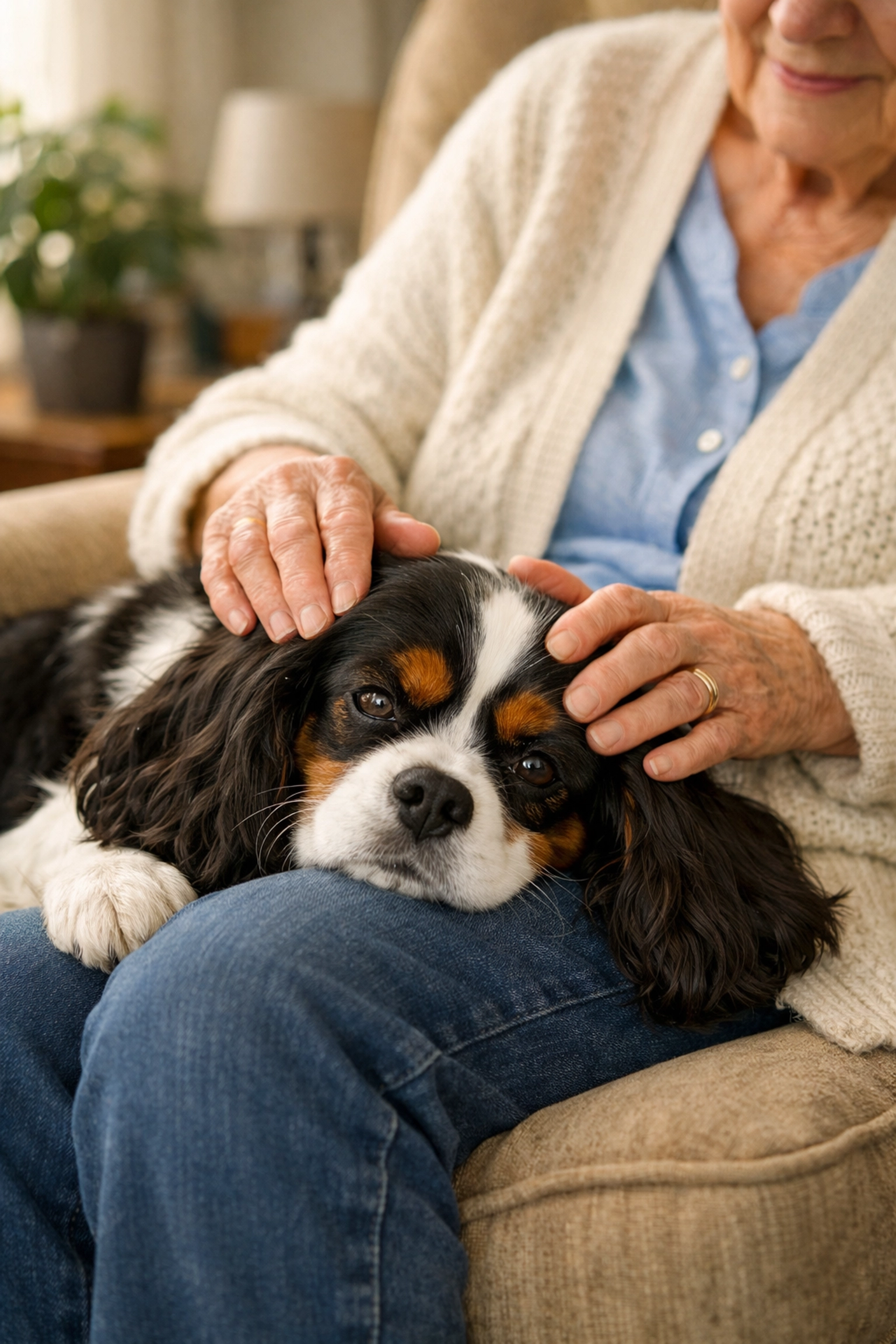
7. They Are the Ultimate Oregon Lifestyle Adapters
Whether you live in a high-rise apartment in the Pearl District or a sprawling farm near Bend, the Cavalier adapts beautifully. They have moderate exercise needs: a daily stroll and some enrichment play are usually enough to keep them happy. This adaptability is key for therapy dogs who may need to transition from a quiet home to a busy school or office environment throughout the day.
For those rainy Oregon days when you can't get outside, we recommend a Therapy Dog Enrichment Ball to keep their minds sharp and bodies active.
8. Oregon Is a Hub for Certified Therapy Dog Programs
Once you have your therapy-quality puppy, Oregon offers incredible resources for certification. Organizations like Pet Partners and Therapy Dogs International have active chapters in the PNW. Many hospitals and schools in the Portland metro area have dedicated programs for certified teams.
Having a dog with the right temperament makes the certification process a joy rather than a struggle. It’s about building on the natural gifts your puppy already possesses.
9. How to Vet a Local Breeder
Not all breeders are created equal, especially when it comes to therapy-quality dogs. When searching for an AKC Cavalier King Charles Breeder Boring Oregon, you should feel empowered to ask questions:
Can you provide proof of OFA health clearances for the parents?
What socialization protocols do you use (e.g., Puppy Culture or ENS)?
How do you match puppy temperaments to specific family needs?
A responsible breeder will be happy to discuss these details because they care about the long-term success of the bond you share with your furry friend.

10. Your Role in the Therapy Partnership
The final piece of the puzzle is you. Being a devoted caretaker means continuing the work the breeder started. This involves regular vet check-ups, consistent training, and providing the "therapeutic comforts" your dog needs to recharge after a day of supporting others.
By providing a stable, loving home, you allow your Cavalier to thrive. Creating a routine is a great way to start; you can find inspiration in our guide to Cavalier Daily Routines.
Creating a Bond That Lasts a Lifetime
Choosing a therapy-quality Cavalier King Charles Spaniel is a commitment to a higher standard of companionship. It’s about more than just finding a pet; it’s about welcoming a family member who will walk beside you through all of life’s adventures.
If you’re ready to find your next beloved companion, we invite you to explore our Therapeutic Comforts collection to see how we support the well-being of our dogs and their families. At Green Acres Nextgen Cavaliers, we are here to help you every step of the way, ensuring your puppy remains healthy, happy, and ready to spread love throughout Oregon.

Bibliography
Beaver, B. V. (2014).Canine Behavior: Insights and Answers. Elsevier Health Sciences. (Focusing on the heritability of temperament and reactivity in domestic dogs).
American Kennel Club (AKC).Cavalier King Charles Spaniel Breed Standards and Health. Retrieved from akc.org.
Serpell, J. A., & Duffy, D. L. (2014). "Dog Breeds and Their Behavior." The Genetics of the Dog. (Scientific look at breed-specific traits and emotional intelligence).
Battaglia, C. L. (2009). "Periods of Early Development and the Effects of Early Stimulation." Journal of Veterinary Behavior. (Explaining the importance of the 3-16 week socialization window).
Cavalier King Charles Spaniel Club (USA).Health and Genetic Research on MVD and SM. Retrieved from ckcsc.org.
Comments