Looking for a Therapy-Quality Cavalier in Oregon? Here Are 10 Science-Backed Traits to Look For
- Green Acres K-9 Resort
- 6 days ago
- 4 min read

If you have ever felt the gentle weight of a Cavalier King Charles Spaniel resting their head on your lap after a long day in the Pacific Northwest drizzle, you know they are more than just pets. They are emotional anchors. Whether you are looking for a gentle companion to visit local schools or an Emotional Support Dog Cavalier King Charles to help navigate your own world, choosing the right puppy is a journey that blends heart with science.
At Green Acres Nextgen Cavaliers in Boring, Oregon, we don't just breed for beauty; we breed for the "soul" of the dog. As an AKC Cavalier King Charles Breeder Boring Oregon, we focus on creating therapy-quality temperaments that can handle the complexities of the modern world.
But what exactly makes a "therapy-quality" companion? Research shows that certain measurable traits predict how well a dog will thrive in a supportive role. Here are 10 science-backed traits to look for in your future Therapy-Quality Cavalier King Charles Spaniel Oregon.
1. High Affiliative Motivation (The "Velcro" Factor)
Science suggests that the most successful therapy dogs have a high "affiliative drive": a consistent tendency to seek out and enjoy human contact, even from unfamiliar people. Your puppy should show an eager, curious interest in meeting new faces rather than withdrawing. This innate desire to connect is the foundation of the bond you'll share.
2. Low Fear and Reactivity
A therapy dog often encounters unpredictable sights and sounds: the clatter of a wheelchair, a sudden laugh, or the hum of an elevator in Portland. Studies indicate that low scores on fearfulness and a minimal "startle response" are essential. A Health-Tested Cavalier King Charles Spaniels Portland OR candidate should be able to process a new sound, look to you for guidance, and return to a calm state almost instantly.
3. High Biddability (Eagerness to Please)
"Biddability" is the scientific term for how much a dog wants to work with their human. A therapy-quality companion isn't just "smart"; they are attentive. They should respond to your cues not just because of a treat, but because they value the interaction with you. This makes training for a therapy dog vest a joyful experience for both of you.
4. Exceptional Tolerance of Handling
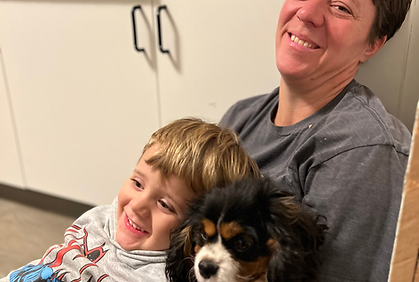
In therapy settings, touch can sometimes be clumsy: especially with children or seniors. Research highlights that a great therapy dog must have a high tolerance for being touched in unusual ways (paws, ears, tail) without showing signs of stress or "guarding." By following a structured socialization program like our Early Neurological Stimulation (ENS), we ensure our puppies are prepared for these gentle interactions.
5. Low Arousal Threshold (The "Off Switch")
While we love a playful puppy, a therapy candidate needs a reliable "off switch." This means they can be active when invited but quickly settle into a calm, relaxed state. This emotional stability ensures your furry friend remains a peaceful presence in sensitive environments like hospitals or quiet libraries.
6. Social Curiosity Over Environment Fixation
Does the puppy focus on the person or are they too distracted by every leaf blowing in the PNW wind? Successful therapy dogs prioritize social interaction over environmental scanning. Science shows that dogs who maintain eye contact and stay engaged with their handler are better at providing emotional support.
7. Secure Attachment Style
Just like people, dogs have attachment styles. A "securely attached" Cavalier is one who is deeply bonded to you but doesn't panic during brief separations. This resilience allows them to work confidently alongside you, trusting that you are their safe base in any new environment.

8. Adaptive Confidence in Novelty
Whether it’s a shiny floor, a strange smell, or a person wearing a large hat, a therapy dog should approach novelty with soft curiosity rather than avoidance. This "can-do" language in their body: loose tails and relaxed ears: is a key indicator of their future success as an emotional support companion.
9. Absence of Resource Guarding
A devoted companion should be happy to share. Science-based temperament testing looks for dogs that do not show aggression over food or toys. This ensures that even in busy family homes or public spaces, your beloved Cavalier remains a safe, gentle member of the community.
10. Genetic and Physical Robustness
You cannot have a stable temperament without a healthy body. Pain is a common cause of sudden "shyness" or irritability in dogs. This is why looking for a breeder who provides Health-Tested Cavalier King Charles Spaniels Portland OR is non-negotiable. At Green Acres Nextgen, we use OFA and DNA screening to check for heart, joint, and neurological health (like Syringomyelia), promoting a better quality of life and ensuring your companion remains comfortable in their work for years to come.
Why Local Expertise in Boring, Oregon Matters
Choosing a puppy from a local Oregon breeder means more than just a shorter drive; it means your puppy has been raised in our unique environment. Our Cavaliers are acclimated to the sights and sounds of the Pacific Northwest: from our misty mornings to our vibrant community life.
Being a responsible owner means being observant and proactive. When you choose a puppy from a program that prioritizes therapy temperaments, you are setting the stage for cherished memories and countless adventures. Whether you’re browsing our Therapeutic Comforts or looking for a therapy dog training manual, we are here to support you every step of the way.
Ensuring Your Companion Stays Healthy and Happy
By focusing on these ten science-backed traits, you aren't just finding a pet; you are finding a partner. With proper care and the right genetic foundation, your Cavalier will become a cherished family member who brings comfort to everyone they meet.
Ready to find your therapy-quality companion? Contact us today to learn about our upcoming litters and how we prioritize the health and heart of the Cavalier King Charles Spaniel.
Bibliography
AKC Expert Advice. (2023). Is Your Dog Right for Therapy Work? American Kennel Club.
C-BARQ Research. (2024). Behavioral epidemiology and temperament dimensions in companion dogs. University of Pennsylvania.
Journal of Veterinary Behavior. (2022). Traits of successful animal-assisted intervention dogs.
Pet Partners. (2024). The 8 Signs Your Pet Could Be a Great Therapy Animal.
Psychology Today. (2022). The Science of the Human-Animal Bond and Therapy Dog Selection.
Comments